
MEMORY
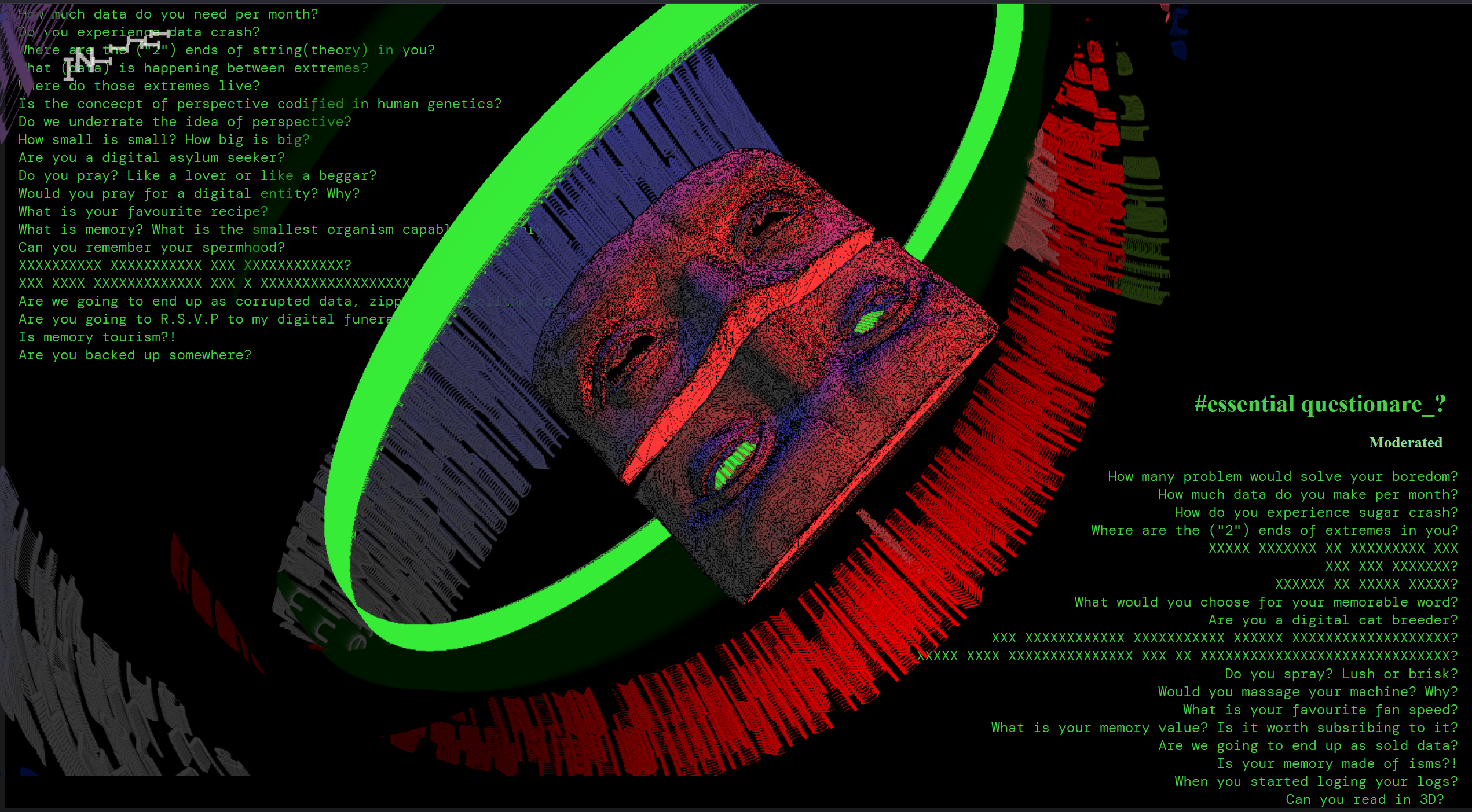
Created as an intervention during the In-grid residency, this web-based artwork, titled Memory, investigates the mechanics of digital collaboration by occupying a peripheral space within the system itself. Originally hosted on the residency’s server but intentionally orphaned from its public interface, the piece functioned as an invisible satellite. It was accessible only through deliberate external routing, exploring the specific tension of being structurally embedded within a collective network while remaining observationally detached. Following the redesign of the residency’s network, the artwork has been relocated and is currently hosted on my personal website – HERE –.
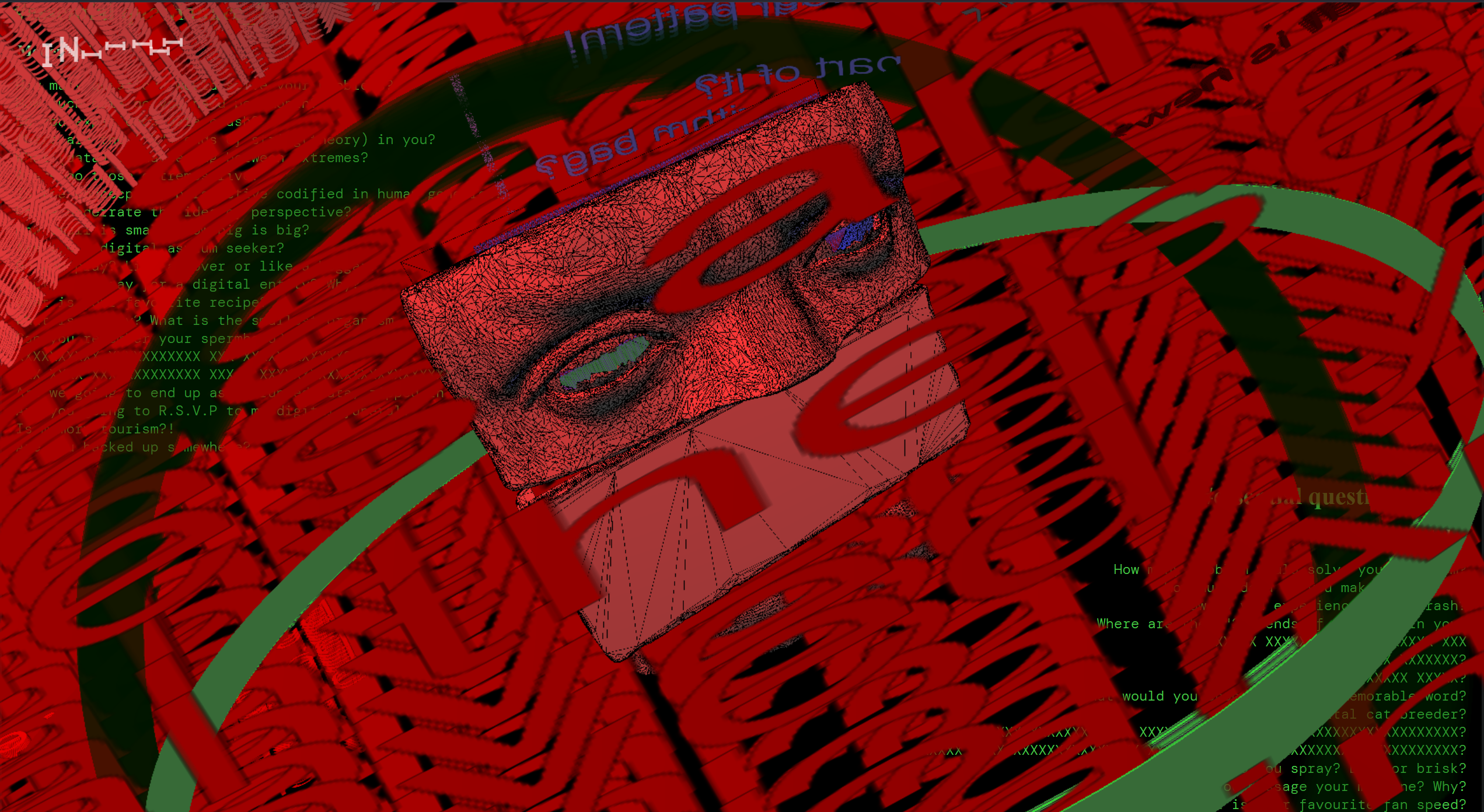
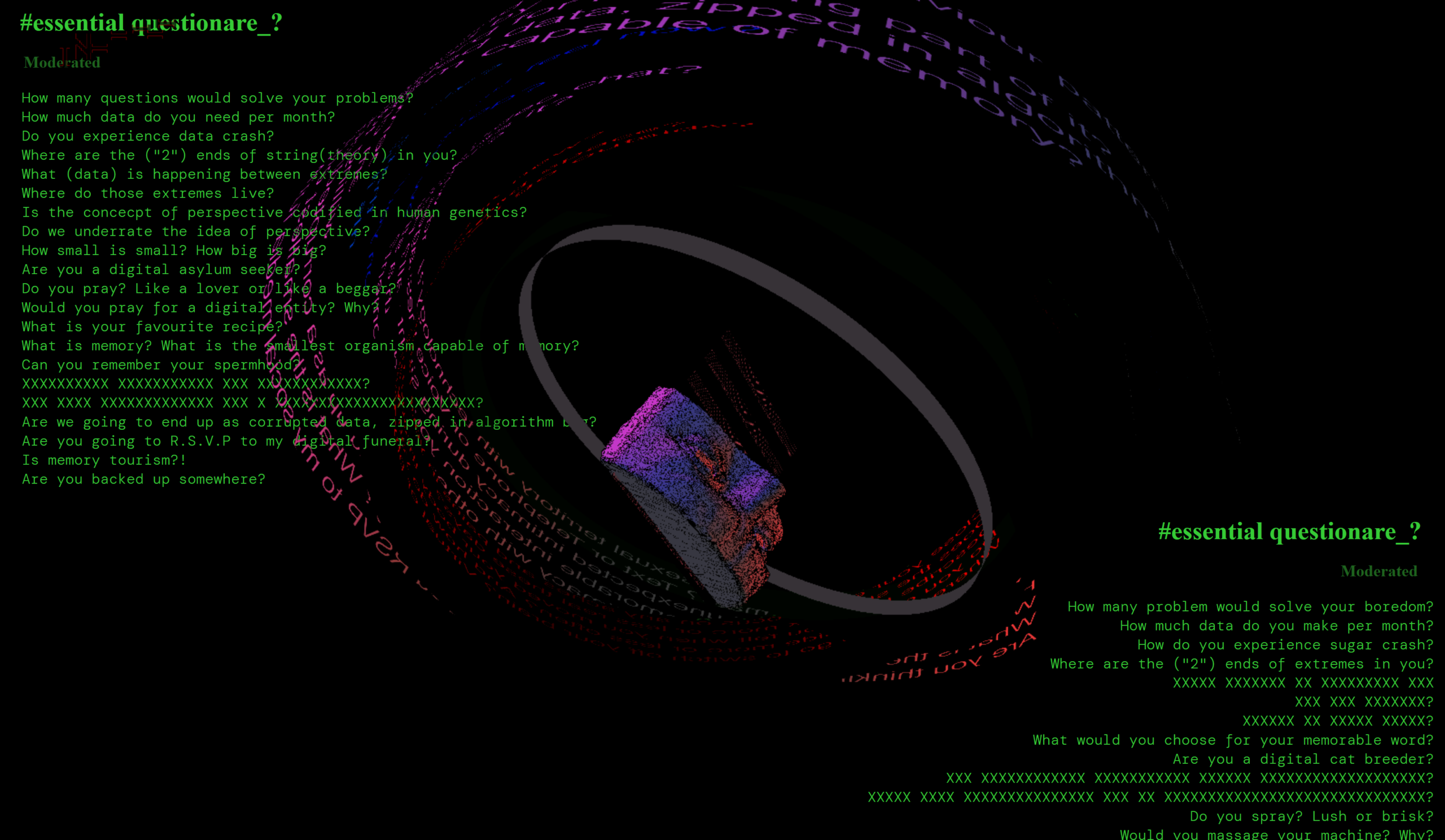
The work synthesises the intense communication streams of digital workspaces -such as synchronous video conferencing and collaborative ideation whiteboards -into a dynamic, coded architecture. Central to the piece is a mock questionnaire that probes the social and psychological realities of our digital existence. By asking pointed questions such as, “Are you a digital asylum seeker?” and “Do you experience data crash?”, the work translates textual inquiry directly into its visual form. These interrogations physically shape the artwork’s rotating digital layers and fragmented central figures, representing the complex, often overwhelming process of assimilating collective dialogue into individual experience and knowledge.
Memory also interrogates the dawn of a new digital predicament and the belief systems that accompany it. As we navigate this emerging modality, the questionnaire probes the concept of a “Digital Deity,” asking whether we are merely projecting our analogous, timeless archetypes onto a digital platform. Will this environment birth new digital virtues, vices, pathologies, and capabilities? By confronting these tensions, the piece asks what new Pandora’s box this increasingly digitised system is opening for human consciousness.
By repurposing these systems of discourse as a hidden, living archive, the artwork provides temporary scaffolding for examining how digital environments shape our perception and social behaviour. It captures the unseen residue of our collaborative footprint, asking how we maintain agency, form our identities, and carve out space as we navigate the unseen margins of a network.
MORE INFO ON THE RESIDENCY BELOW
Arebyte’s 2020 programme invites scrutiny around the concept of Systems. At the outset, this thematic structure provokes us to question what constitutes a system in itself, how it is maintained and how it acts upon us. In-grid is an animate response to this provocation. Ingrid is the product of a collective residency between artists from Goldsmiths Computing Department in collaboration with arebyte Gallery and AOS (arebyte on screen).
On.Grid
In form, Ingrid is a web-based gallery space, archive and artwork in themself, their interface an intermediary facilitating conversation between their visitors. Developed over the course of 2020 and opening on 1st June, this process-led programme of interventions aims to unsnarl what collaborative making might be, and what disruptive methods of artistic production can offer in terms of physical and online outputs. Through artistic intervention, performance moments and a public programme of events, Ingrid will question how we exchange concepts and communicate as individuals and as collectives. By repurposing existing systems of discourse and interchange, Ingrid hopes to comment on the potentialities of the digital, while also acknowledging that threats to privacy, agency and digital equity are increasingly commonplace. What happens when the system fails?
Of.Grid
Over the course of Ingrid’s six-week dwelling at arebyte, there will be sustained moments of discourse between Ingrid and their constituent artists, the public, and invited participants. Workshops, symposium and collective discussions will, scaffolded by a sustained pedagogical framework, attempt to multiply what a residency of this kind can offer the public. Ingrid is not didactic, nor are they fixed. Both residents and visitors will have the opportunity to inform the development of the other.
Off.Grid
A living archive, Ingrid is designed to continually change and constantly hoard. Visitors will be invited to steal, break and critique as much as learn or appreciate. In this way, it is our hope that visitors to Ingrid are compelled to visit again, to see something new or leave something of their own. This residency will have residue.